


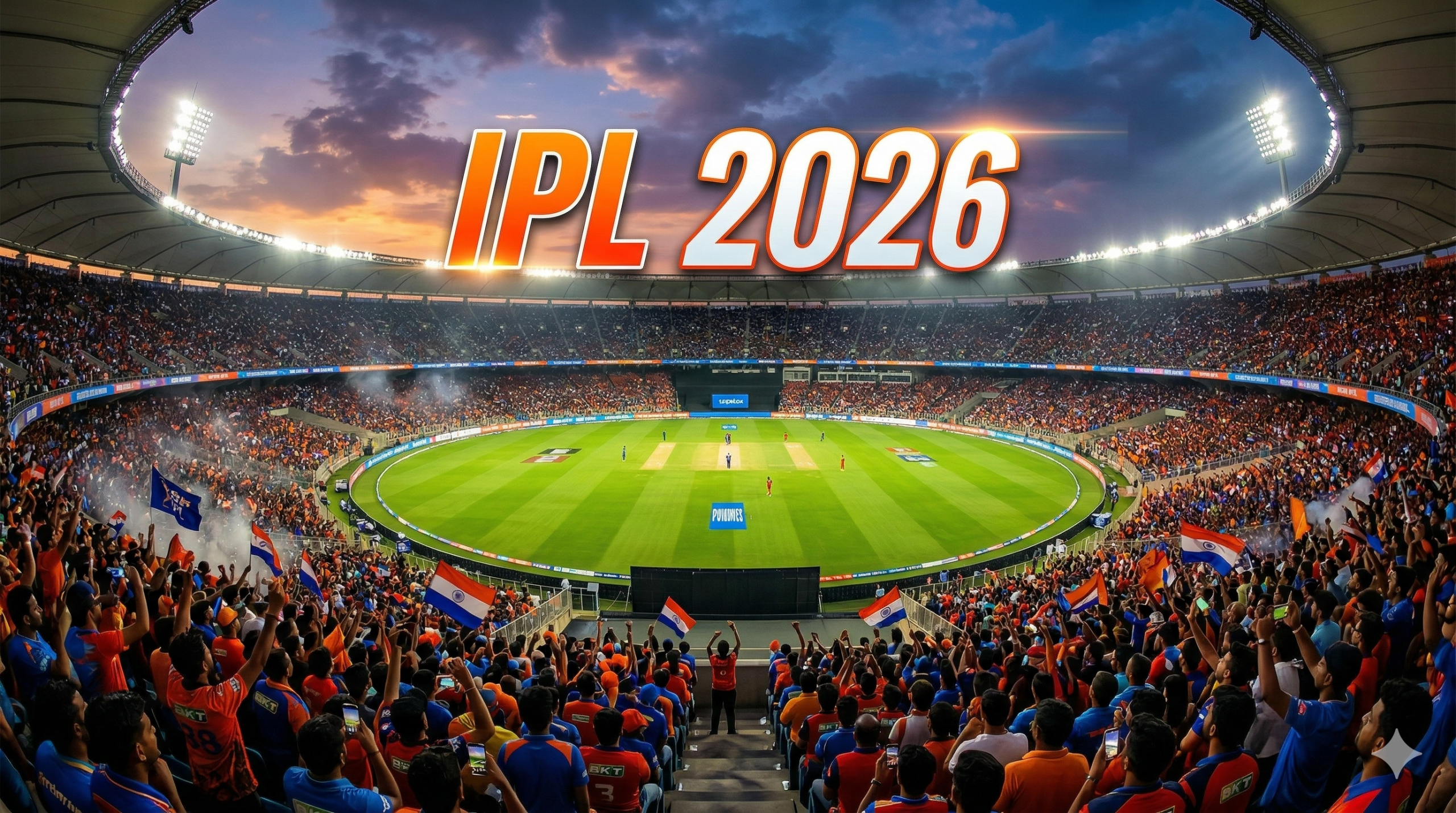
Anticipation for the 19th Indian Premier League is at a fever pitch. Fans around the world are reviewing the IPL 2026 Full Schedule to plan their summer cricket viewing. The TATA IPL 2026, organized by the BCCI, starts on March 28 and concludes with a grand finale on May 31. Defending champions Royal Challengers Bengaluru (RCB) open the tournament by hosting Sunrisers Hyderabad (SRH) at M. Chinnaswamy Stadium, a rematch expected to deliver exciting offense. Because State Assembly elections in Assam, Kerala, Tamil Nadu, West Bengal, and Puducherry coincide with IPL dates, the BCCI has published the fixture list in segments, prioritizing the first 20 matches.
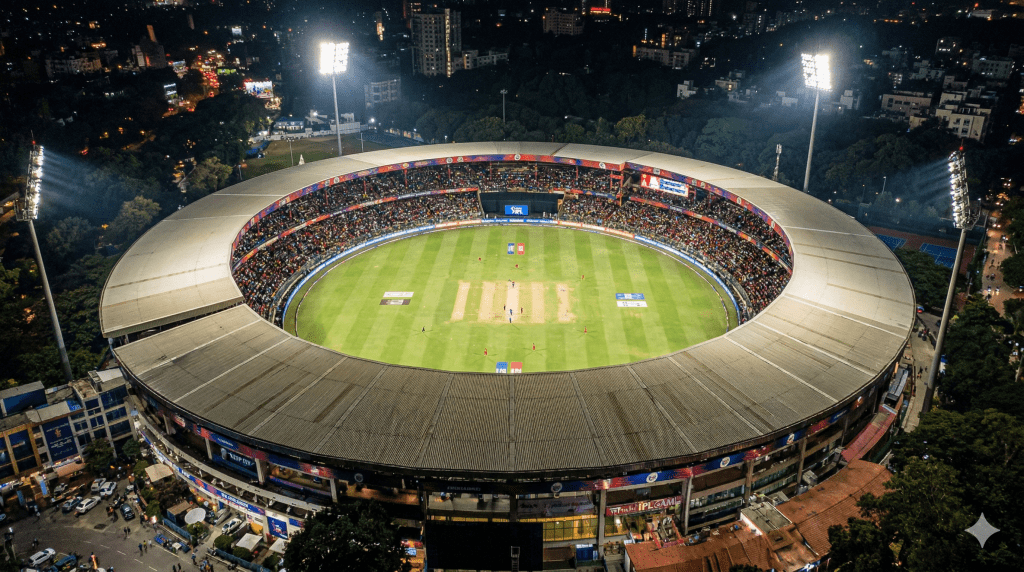
Use the links below to jump to any section of the IPL 2026 Full Schedule, from Phase 1 fixtures to ticket prices and team captains.
The schedule for the remaining fixtures is expected to be announced shortly after the Election Commission finalizes the state polling dates. Fans are encouraged to stay tuned for upcoming updates, which will help them plan for the rest of the season as soon as further details are released.
This report provides cricket fans with a comprehensive guide to the upcoming season. It contains match schedules, ticketing details, team leadership summaries, player auction insights, and key match statistics for TATA IPL 2026.
Fans searching for the IPL 2026 Full Schedule will find
this guide covers every confirmed fixture, venue, and
kickoff time for the entire tournament.
Decoding the IPL 2026 Full Schedule: Phase 1 Match Dates
Hosting a large franchise tournament during national elections demands exact scheduling. The BCCI finalized Phase 1, which will span March 28 to April 12. The remaining fixtures will be announced after the Election Commission sets the polling dates. This guarantees the availability of municipal and security resources for both events.
In the first fortnight, all 10 franchises compete in multiple host cities, expanding the tournament’s nationwide reach. The schedule includes evening matches and weekend double-headers.
Official Phase 1 Fixtures
The following data table outlines the confirmed match-ups, dates, and venues for the inaugural phase of the competition:
| 1 | March 28 | Saturday | Royal Challengers Bengaluru vs. Sunrisers Hyderabad | M. Chinnaswamy Stadium, Bengaluru | 7:30 PM |
| 2 | March 29 | Sunday | Mumbai Indians vs. Kolkata Knight Riders | Wankhede Stadium, Mumbai | 7:30 PM |
| 3 | March 30 | Monday | Rajasthan Royals vs. Chennai Super Kings | Barsapara Cricket Stadium, Guwahati | 7:30 PM |
| 4 | March 31 | Tuesday | Punjab Kings vs. Gujarat Titans | PCA New Stadium, New Chandigarh | 7:30 PM |
| 5 | April 1 | Wednesday | Lucknow Super Giants vs. Delhi Capitals | BRSABV Ekana Cricket Stadium, Lucknow | 7:30 PM |
| 6 | April 2 | Thursday | Kolkata Knight Riders vs. Sunrisers Hyderabad | Eden Gardens, Kolkata | 7:30 PM |
| 7 | April 3 | Friday | Chennai Super Kings vs. Punjab Kings | M.A. Chidambaram Stadium, Chennai | 7:30 PM |
| 8 | April 4 | Saturday | Delhi Capitals vs. Mumbai Indians | Arun Jaitley Stadium, New Delhi | 3:30 PM |
| 9 | April 4 | Saturday | Gujarat Titans vs. Rajasthan Royals | Narendra Modi Stadium, Ahmedabad | 7:30 PM |
| 10 | April 5 | Sunday | Sunrisers Hyderabad vs. Lucknow Super Giants | Rajiv Gandhi Intl Stadium, Hyderabad | 3:30 PM |
| 11 | April 5 | Sunday | Royal Challengers Bengaluru vs. Chennai Super Kings | M. Chinnaswamy Stadium, Bengaluru | 7:30 PM |
| 12 | April 6 | Monday | Kolkata Knight Riders vs. Punjab Kings | Eden Gardens, Kolkata | 7:30 PM |
| 13 | April 7 | Tuesday | Rajasthan Royals vs. Mumbai Indians | Barsapara Cricket Stadium, Guwahati | 7:30 PM |
| 14 | April 8 | Wednesday | Delhi Capitals vs. Gujarat Titans | Arun Jaitley Stadium, New Delhi | 7:30 PM |
| 15 | April 9 | Thursday | Kolkata Knight Riders vs. Lucknow Super Giants | Eden Gardens, Kolkata | 7:30 PM |
| 16 | April 10 | Friday | Rajasthan Royals vs. Royal Challengers Bengaluru | Barsapara Cricket Stadium, Guwahati | 7:30 PM |
| 17 | April 11 | Saturday | Punjab Kings vs. Sunrisers Hyderabad | PCA New Stadium, New Chandigarh | 3:30 PM |
| 18 | April 11 | Saturday | Chennai Super Kings vs. Delhi Capitals | M.A. Chidambaram Stadium, Chennai | 7:30 PM |
| 19 | April 12 | Sunday | Lucknow Super Giants vs. Gujarat Titans | BRSABV Ekana Cricket Stadium, Lucknow | 3:30 PM |
| 20 | April 12 | Sunday | Mumbai Indians vs. Royal Challengers Bengaluru | Wankhede Stadium, Mumbai | 7:30 PM |
Data accurately compiled from official BCCI announcements and franchise fixture lists.
The tight schedule demands immediate readiness. For example, Rajasthan Royals (RR) face an intense stretch, hosting three matches in Guwahati over 11 days against CSK, MI, and RCB. Guwahati’s evening dew will influence toss decisions, likely making captains field first to avoid a slippery ball in the second innings.
Kolkata Knight Riders (KKR) also have an opportunity for early momentum with three consecutive home matches against SRH, PBKS, and LSG between April 2 and April 9. Securing points during this home stand is important before the travel demands of Phase 2.
IPL 2026 Full Schedule: Team Travel and Venue Strategy
The 2026 format keeps the 74-match structure, despite rumors of expansion to 84 games. The BCCI and IPL Governing Council hope to move to a 94-match, double round-robin format by 2028. For now, ten teams are split into two groups of five. Each team plays the other four teams in its group twice (home and away). Each team also plays four teams from the other group once, and one designated “rival” from the opposite group twice. In total, every team plays 14 league matches.
To manage the schedule, the league has expanded its geographic reach. Some franchises use both primary and secondary venues. This helps grow their fan base and commercial presence.
The Dual-Venue Strategy
Using secondary venues changes teams’ travel and pitch preparation strategies:
- Royal Challengers Bengaluru (RCB) use the iconic M. Chinnaswamy Stadium as their primary base. They will also play two home matches at the Shaheed Veer Narayan Singh International Cricket Stadium in Raipur. This move expands their access to central India. The Raipur pitch is often slower than Bengaluru’s batting-friendly track. It offers a massive seating capacity.
- Punjab Kings (PBKS) will divide their home games between the new PCA New Stadium in New Chandigarh (Mullanpur) and the high-altitude HPCA Stadium in Dharamshala. Dharamshala matches usually favor seam bowlers due to the cooler weather and atmospheric conditions. PBKS will need to modify their playing XI for these conditions.
- Rajasthan Royals (RR) play home games in Jaipur at Sawai Mansingh Stadium. However, three early-season matches will be held at Barsapara Cricket Stadium in Guwahati. This initiative reaches the large cricket-viewing audience in Northeast India.
Single-Venue Fortresses
The other seven franchises retain their home advantage at established stadiums: Chennai Super Kings (CSK) play at the M.A. Chidambaram Stadium in Chennai.
- Delhi Capitals (DC): Arun Jaitley Stadium, New Delhi.
- Gujarat Titans (GT): Narendra Modi Stadium, Ahmedabad.
- Kolkata Knight Riders (KKR): Eden Gardens, Kolkata.
- Lucknow Super Giants (LSG): BRSABV Ekana Cricket Stadium, Lucknow.
- Mumbai Indians (MI): Wankhede Stadium, Mumbai.
- Sunrisers Hyderabad (SRH): Rajiv Gandhi International Cricket Stadium, Hyderabad.
The M. Chinnaswamy Infrastructure Overhaul
A major narrative before the schedule’s release was RCB’s home ground viability. The M. Chinnaswamy Stadium underwent strict regulatory scrutiny after a deadly stampede during the 2025 title celebrations, which killed 11. The Karnataka State Cricket Association (KSCA) made major infrastructure upgrades to keep its hosting rights for 2026.
Under the supervision of an expert safety committee led by G. M. Maheshwar Rao, and in cooperation with local police, fire rescue, and medical departments, the stadium experienced rigorous safety upgrades. Key improvements included widening access gates and establishing medical triage centers. Strict zonal crowd-control measures were applied, limiting spectator access to Cubbon Road and Link Road.
After these changes, Karnataka Home Minister G. Parameshwara approved full capacity at 33,000. This clearance allows Bengaluru to host the opener, select playoffs, and the Grand Final on May 31.
For fans keen to attend live, the 2026 season delivers a streamlined, digital ticketing system. Franchises moved ticket sales online. This removed physical queues.
Digital Partnerships and Booking Phases
Ticket sales are split among key platforms, guaranteeing stable servers during high-demand periods:
- BookMyShow remains the exclusive ticketing partner for the Kolkata Knight Riders, Lucknow Super Giants, Mumbai Indians, and Gujarat Titans.
- District by Zomato handles ticketing for the Rajasthan Royals, Punjab Kings, and selected Delhi Capitals matches.
- The Royal Challengers Bengaluru maintain strict in-house control over their inventory. They process all ticket sales exclusively via the official franchise website and mobile app.
Franchises use phased sales to reward brand loyalty. For example, the Mumbai Indians offer a pre-sale for Google Pay users. They then offer early access for MI Gold, Silver, Junior, and Blue members. General sales open last.
Pricing Economics Across Venues
Ticket pricing for 2026 is highly elastic, varying by venue location, seating tier, and opponent. Franchises use dynamic pricing to regulate public access and capitalize on corporate demand for premium hospitality. As a general guide for fans, most regular admission seats for Phase 1 fixtures are expected to start around INR 800 to INR 1,200 in smaller venues, and can range up to INR 1,500 to INR 2,500 in larger metropolitan stadiums when high-profile teams compete. Premium hospitality boxes and VIP seating may range from INR 7,500 up to INR 18,000 per ticket, depending on the stadium and match importance. These ballpark figures help fans gauge affordability and plan attendance as ticket sales open.
| General Admission / Upper Gallery | ₹450 – ₹2,500 | Eden Gardens (KKR) offers highly affordable entry points starting at ₹1,200. Mullanpur (PBKS) general stands begin at ₹1,500. |
| Mid-Range / Lower Bowl | ₹2,700 – ₹5,500 | High-demand seats near the boundary in Kolkata scale between ₹3,000 and ₹5,500. Guwahati (RR) lower tier seats range from ₹2,700 to ₹4,200. |
| Premium Hospitality / Club House | ₹7,500 – ₹15,000+ | PBKS hospitality tickets start at ₹7,500. Eden Gardens Club House access routinely exceeds ₹15,000. |
| VIP Corporate Suites | ₹19,000 – ₹40,000 | Elite corporate boxes at the Ekana Stadium (LSG) and Narendra Modi Stadium (GT) peak at ₹40,000. |
Fans planning to attend matches listed in the IPL 2026
Full Schedule should book early — Phase 1 fixtures near
major metros sell out within hours of going live.
Aggregated from early phase 1 box office releases and franchise ticketing portals.
To enhance the matchday experience and reduce congestion, franchises offer ticket holders perks like free matchday metro rides, pre-booked parking, and dedicated shuttles via official portals. In 2026, fans can also look forward to a range of new engagement features. Several franchises are launching interactive stadium zones featuring virtual reality batting simulators and fan skill challenges, allowing attendees to compete for prizes and merchandise. Official apps will roll out real-time polls that let fans vote for Player of the Match or predict key moments, with top participants winning exclusive meet-and-greet opportunities or digital collectibles. Social media contests and augmented-reality selfie stations inside stadiums add another layer of fun, while select matches will feature halftime pitch-side fan games broadcast on the big screen. These initiatives are designed to deliver a more immersive and memorable experience for every attendee.
Auction Fireworks and Blockbuster Pre-Season Trades
The 2026 title race began with a Player Auction in Abu Dhabi on December 16, 2025. Of 1,390 registered players, 350 (240 Indian, 110 overseas) were auctioned, filling 77 roster spots across 10 franchises.
The auction’s financial footprint was staggering. The 10 teams collectively spent INR 215.45 crore. They acquired 48 domestic players and 29 overseas professionals.
The Overseas Premium and Domestic Surprises
Australian all-rounder Cameron Green dictated the international market, commanding an eye-watering bid of INR 25.20 crore. This historic acquisition illustrates the immense premium placed on versatile international athletes capable of contributing elite performances with both bat and ball, allowing franchises to perfectly balance their playing XIs.
However, the most insightful narrative emerged from the domestic uncapped market. The Chennai Super Kings executed a bold scouting strategy. They invested a combined total of INR 28.40 crore on just two uncapped Indian prospects: Prashant Veer and Kartik Sharma. Both were secured for INR 14.20 crore each. Dedicating such a large share of the salary cap to untested domestic talent marks a shift. Franchises are now favoring internal scouting data over international reputation. The aim is to secure foundational domestic players before their market value rises after an international debut.
Other major capital allocations included the Delhi Capitals reinforcing their squad with established international talent. DC secured South African finisher David Miller for INR 2 crore and Sri Lankan batter Pathum Nissanka for INR 4 crore. They also added fast bowlers Lungi Ngidi and Kyle Jamieson, each for INR 2 crore. This gives DC important rotation options for their pace attack throughout the 14-match league stage.
The Samson-Jadeja Mega Trade
While the auction floor generated the financial headlines, the pre-season trade window delivered one of the most consequential personnel shifts in the league’s history. In a massive bilateral agreement, the Rajasthan Royals traded their long-time captain and wicketkeeper-batsman Sanju Samson to the Chennai Super Kings, while legendary spin-bowling all-rounder Ravindra Jadeja returned to the Royals.
This transaction essentially changes the tactical geometry for both franchises. Samson leaves RR after a monumental decade where he amassed over 4,000 runs and served as the focal point of their batting order. His arrival at CSK immediately fortifies their top order, providing new captain Ruturaj Gaikwad with an elite, highly experienced partner.
Conversely, Jadeja’s return to RR is a tactical masterstroke. Jadeja, who played a key role in Rajasthan’s inaugural title victory in 2008, brings world-class left-arm spin and lower-order hitting. His specific skill set perfectly addresses RR’s historical need for a reliable domestic all-rounder, and his left-arm spin will be incredibly dangerous on the gripping surfaces expected during their home fixtures in Guwahati and Jaipur.
These roster changes will significantly influence how
teams approach the IPL 2026 Full Schedule, particularly
in the high-stakes opening fortnight.
Strategic Implications of the IPL 2026 Full Schedule on Player Matchups
To truly project the tactical flow of the upcoming season, one must examine the statistical baselines established during the 2025 campaign. The underlying metrics of run production and wicket acquisition dictate how franchises formulate their starting XIs and plan their bowling rotations.
The Run-Scoring Elite
The 2025 season confirmed that elite T20 batting requires a perfect combination of high average and extreme strike rate. Gujarat Titans’ top-order anchor Sai Sudharsan set the benchmark, compiling a massive 759 runs at an average of 54.21 and a blistering strike rate of 156.17.
He was closely pursued by Mumbai Indians’ Suryakumar Yadav, who amassed 717 runs at a staggering average of 65.18 and an astronomical strike rate of 167.91, strengthening his status as the most dangerous 360-degree hitter in the format. RCB’s Virat Kohli continued his persistent consistency, scoring 657 runs at an average of 54.75 and a strike rate of 144.71. For opposing captains in 2026, breaking these top-order partnerships early in the powerplay is more than a priority; it is a mathematical necessity to prevent the game from slipping out of reach by the 15th over.
The Wicket-Taking Hierarchy
Bowling dominance in the previous season was heavily defined by raw pace and unorthodox spin. The Purple Cap was claimed by Gujarat Titans’ fast bowler Prasidh Krishna, who secured 25 wickets — see our full most wickets in T20 cricket list through sheer velocity and steep bounce. He was closely followed by CSK’s Afghan mystery spinner Noor Ahmad with 24 wickets, and RCB’s pinpoint Australian seamer Josh Hazlewood with 22 wickets.
The success of left-arm pacers like Trent Boult (MI, 22 wickets) and Arshdeep Singh (PBKS, 21 wickets) illustrates the tactical value of the left-arm angle, which naturally swings the ball back into right-handed batters, frequently resulting in early powerplay breakthroughs.
Micro-Matchups: The Battle Within the Game
Beyond the macro-statistics, the outcomes of IPL fixtures are often decided by highly specific micro-matchups between elite individuals. A prime example keenly awaited by fans is the confrontation between the Mumbai Indians’ pace spearhead, Jasprit Bumrah, and the Gujarat Titans’ explosive opener, Jos Buttler.
Historical data reveal a severe mismatch in this specific encounter. Across 10 previous IPL meetings, Bumrah has dominated the Englishman, dismissing him twice while conceding only 69 runs off 73 deliveries. This restricts Buttler to a paltry strike rate of 94.52 against Bumrah, an astonishingly low figure for a batter who boasts 4,120 career IPL runs at an overall strike rate exceeding 149. Bumrah’s mental edge extends to international cricket, where he has dismissed Buttler twice in T20Is while yielding just 10 runs off 15 balls.
When MI clashes with GT on the schedule, Gujarat’s tactical think-tank may be forced to instruct Buttler to play defensively during Bumrah’s spells, deferring the aggressive run-scoring mandate to his opening partner, Shubman Gill, to ensure Buttler survives and can exploit the weaker bowlers in the Mumbai attack.
The Leadership Matrix: A Generational Changing of the Guard
The 2026 season marks a decisive inflection point for franchise leadership. For full squad details, see our IPL 2026 teams and squads guide. A generational transition is fully underway, with several franchises handing the tactical reins to a younger, highly analytical cohort of domestic stars, moving away from depending exclusively on established international veterans.
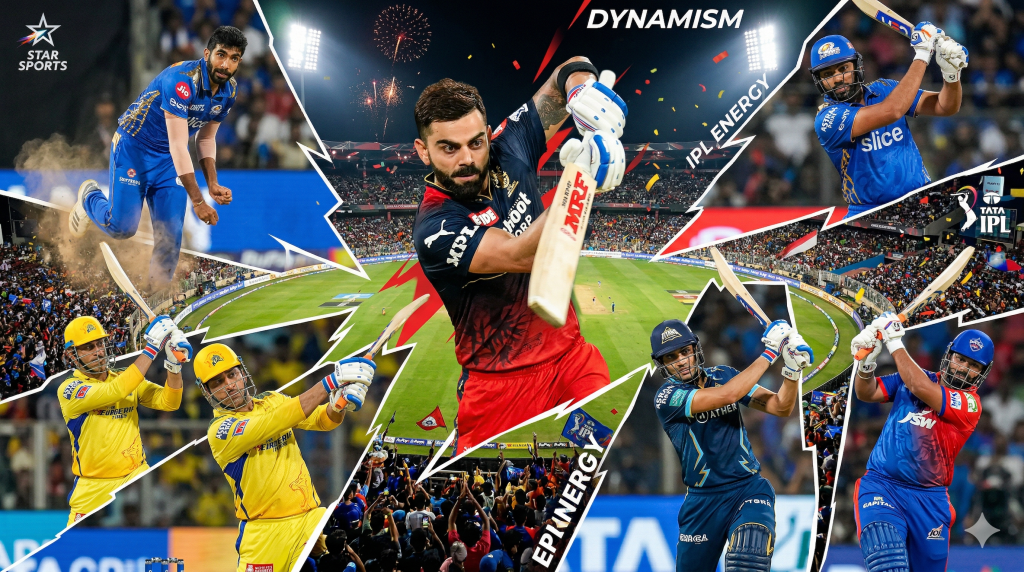
The leadership framework for the 10 franchises delivers a fascinating mix of tactical philosophies:
| Chennai Super Kings | Ruturaj Gaikwad | Opening Batsman | Continuing the methodical, data-driven legacy established by MS Dhoni, focusing on consistency and spin utilization. |
| Delhi Capitals | Axar Patel | Spin-Bowling All-Rounder | A sharp tactical mind elevated to full command, likely to rely heavily on matchup-based bowling changes. |
| Gujarat Titans | Shubman Gill | Opening Batsman | Consolidating his leadership credentials, mirroring his ascendant role within the Indian national team structure. |
| Kolkata Knight Riders | Ajinkya Rahane | Top-Order Batsman | A surprising pivot to immense veteran stability and classical, calm tactical application in high-pressure scenarios. |
| Lucknow Super Giants | Rishabh Pant | Wicketkeeper-Batsman | Brings a highly dynamic, aggressive, and instinctive leadership style that prioritizes high-risk, high-reward plays. |
| Mumbai Indians | Hardik Pandya | Fast-Bowling All-Rounder | Retaining command of the five-time champions, focusing on raw athletic dominance and flexible batting orders. |
| Punjab Kings | Shreyas Iyer | Middle-Order Batsman | Reunited with head coach Ricky Ponting, aiming to instill a highly structured, data-heavy approach to match-ups. |
| Rajasthan Royals | Riyan Parag | Batting All-Rounder | A bold transition of power following Sanju Samson’s departure, signaling absolute faith in their internal development pathway. |
| Royal Challengers Bengaluru | Rajat Patidar | Top-Order Batsman | Tasked with defending the title; allows veteran Virat Kohli to operate purely as an unburdened run-scorer. |
| Sunrisers Hyderabad | Pat Cummins (Ishan Kishan*) | Fast Bowler (Wicketkeeper) | Ishan Kishan serves as interim tactical commander pending Cummins’ return from injury, managing a highly aggressive batting core. |
Synthesized from official franchise roster declarations.
The elevation of Riyan Parag at RR and Rajat Patidar at RCB illustrates the transforming dynamics of franchise trust. Parag’s appointment, in particular, demonstrates the Royals’ devotion to their academy structure, trusting the tactical insight of a player whose entire professional maturation has occurred within their ecosystem. Meanwhile, Shreyas Iyer’s installation at the Punjab Kings represents a deliberate attempt to import proven leadership infrastructure. His reunion with coach Ricky Ponting—a pairing that previously guided the Delhi Capitals to a final—suggests PBKS will adopt a highly regimented approach, striving to eradicate the tactical inconsistencies that have traditionally plagued the franchise.
With the leadership boards set, the rosters finalized, and the venues fortified, the stage is perfectly constructed for the ultimate T20 spectacle. As the countdown to the March 28 opener accelerates, cricket fans are evaluating every variable, knowing that in the high-pressure environment of the IPL, a single tactical decision, a single breakout performance, or a single drop of dew on a Guwahati outfield can alter the destiny of the entire season.
Bookmark this page for the complete IPL 2026 Full Schedule as Phase 2 fixtures are confirmed.
IPL 2026 Full Schedule — Frequently Asked Questions
When does the IPL 2026 Full Schedule start?
The IPL 2026 Full Schedule begins on March 28, 2026 with Royal Challengers Bengaluru hosting Sunrisers Hyderabad at M. Chinnaswamy Stadium.
How many matches are in the IPL 2026 Full Schedule?
The IPL 2026 Full Schedule contains 74 matches across 10 franchises, concluding with the Grand Final on May 31.
Where can I find the complete IPL 2026 Full Schedule?
The complete IPL 2026 Full Schedule is available on MegaCric.com, updated as BCCI confirms Phase 2 fixtures.