


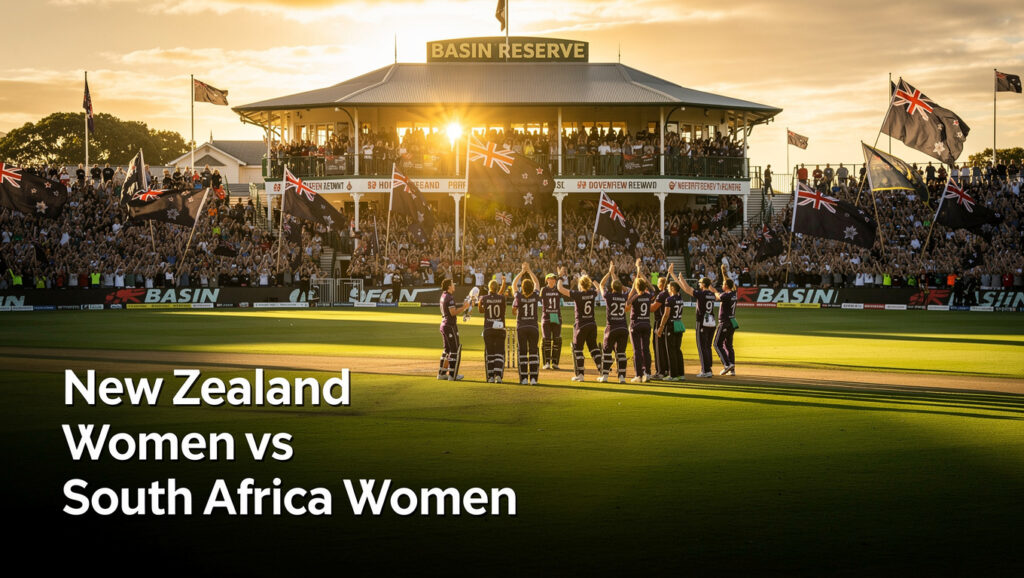
Zealand Women Rewrite the ODI Record Books
On a historic day at Wellington’s Basin Reserve, the New Zealand Women’s cricket team set a target of 321 set by a formidable South African side, the White Ferns embarked on a chase that seemed improbable, bordering on impossible. Yet, led by an innings of sublime brilliance from Amelia Kerr, they not only achieved the target but shattered a 13-year-old world record for the highest successful run chase in women’s ODI history. This was more than a victory; it was a statement—a masterclass in courage, tactical execution, and the soaring evolution of the women’s game. This analysis delves deep into how New Zealand women script history, moving beyond the headline score to explore the strategy, the key performers, the conditions, and the profound global implications of this landmark achievement.
Quick Answer — Key Facts
| Fact | Detail |
|---|---|
| Record Broken | Highest successful run chase in women’s ODI history. |
| New Record | New Zealand chased 321/5 (45.2 overs) vs South Africa. |
| Previous Record | 325 by India vs New Zealand in 2010 (target 321). |
| Match Date | February 15, 2025 (3rd ODI, South Africa tour of New Zealand). |
| Star Performer | Amelia Kerr: 179* runs (149 balls), the highest individual score in a successful women’s ODI chase. |
Historical Background & Context
The landscape of women’s ODI cricket has been undergoing a quiet revolution, with power-hitting and aggressive intent becoming increasingly prevalent. However, the pinnacle of chasing prowess had remained static since March 2010, when India’s legendary lineup, featuring Mithali Raj and Jhulan Goswami, hunted down 321 against New Zealand. For over a decade, this target stood as the Everest of women’s ODI run-chases, a benchmark of ultimate batting under pressure. Enter the New Zealand Women of 2025. Under the leadership of Sophie Devine, this team has been building a reputation for fearless cricket, blending experienced campaigners with dynamic young talent. The stage was set during the third ODI against a powerful South African team, led by the prolific Laura Wolvaardt. After posting a daunting 320/9, South Africa seemed to have the game firmly in their grasp. The monumental task ahead of the White Ferns was not just about winning a bilateral series match; it was about confronting history itself and proving that the modern women’s game operates on an entirely new plane of possibility.
How New Zealand Women Scripted the Historic Chase
The execution of this record chase was a textbook example of modern limited-overs batting strategy, executed with clinical precision. The White Ferns’ approach was not one of reckless aggression from ball one, but a calculated dissection of a massive target. The initial game plan, evident in the Powerplay, was to lay a solid foundation without letting the required run rate spiral out of control. Facing a potent South African attack featuring Ayabonga Khaka and Masabata Klaas, openers Suzie Bates and Sophie Devine carefully negated the new ball, ensuring no early wickets fell.
The tactical shift began in the middle overs, spearheaded by Amelia Kerr and the middle order. Recognizing the need to target specific bowlers, they expertly manipulated the field, using deft placement and sharp running to keep the scoreboard ticking. The true acceleration was a calculated risk, initiated around the 25-over mark. Kerr, in particular, identified the non-turning off-spin of Nondumiso Shangase and the pace of Eliz-Mari Marx as key phases to attack, launching a series of boundaries that shifted the momentum irrevocably. This was not a frenzied slog; it was a controlled explosion, maintaining a run rate above 7 without ever appearing panicked. The chase was a masterclass in phase-based batting, where each partnership had a clear role, perfectly illustrating how the New Zealand women script history through intelligent, assertive cricket. For comprehensive ball-by-ball data and scorecards from such historic matches, resources like ESPN Cricinfo – Cricket Scores and News are invaluable.
Amelia Kerr’s Masterclass: More Than Just 179*
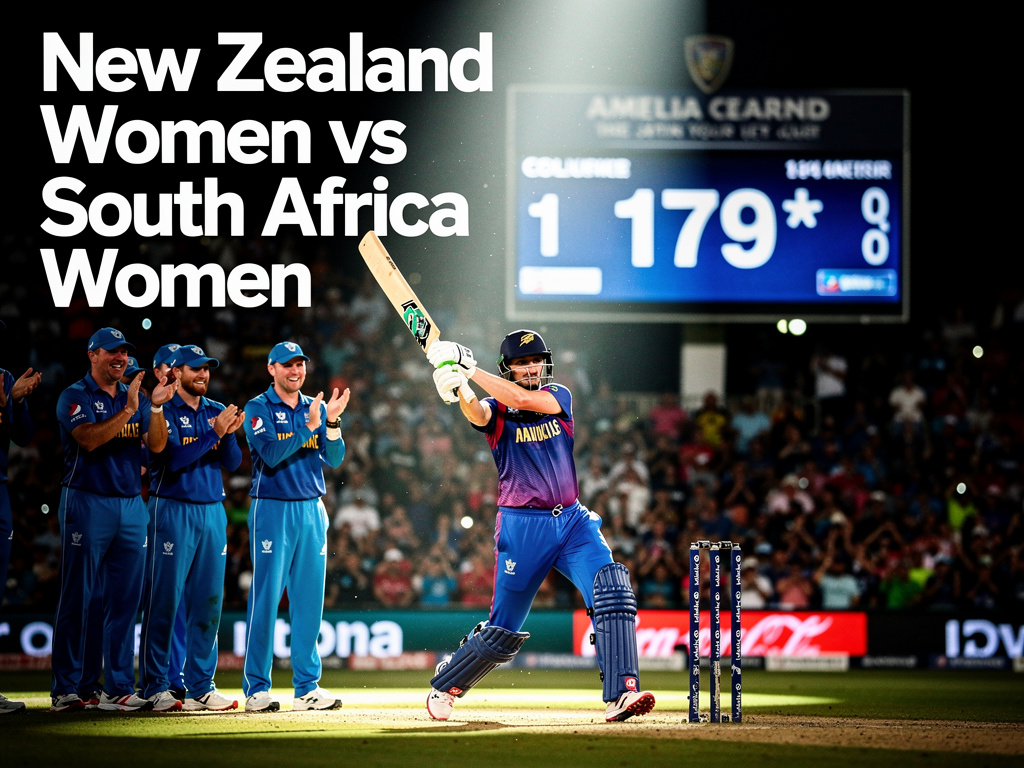

While the score of 179 not out is staggering, the true genius of Amelia Kerr’s innings lay in its construction and context. This was not a chanceless, flawless display, but an innings of immense character and adaptability. Early on, she played within herself, anchoring the innings after the loss of Devine. Her initial boundary count was modest, focusing on the rotation of strike and building a partnership with Georgia Plimmer.
Key Phases of Amelia Kerr’s Record Innings:
| Overs | Runs Scored | Strike Rate | Key Shots & Strategy |
| :— | :— | :— | :— |
| 1-15 | 45 | 100.0 | Anchoring phase. Focus on singles, doubles, and punishing width. Built the platform. |
| 16-35 | 78 | 130.0 | Acceleration phase. Targeted specific bowlers (Shangase, Marx) with calculated aggression, hitting gaps. |
| 36-45.2 | 56 | 155.5 | Finishing phase. Unleashed a full array of shots, including lofted drives and sweeps, to seal the record. |
The second phase of her innings showcased her elite game awareness. As the required rate climbed slightly, she shifted gears seamlessly, targeting the shorter boundaries at the Basin Reserve with precision. Her wagon wheel would show a heavy concentration of runs square of the wicket and through the covers, but it was her ability to find the gap consistently that deflated the South African attack. Perhaps her most critical contribution was her leadership at the crease; she farmed the strike expertly in the final overs, shielding less-experienced partners and ensuring she faced the majority of deliveries when history was within grasp. Her innings symbolized the new-age batter: technically sound, physically powerful, and mentally unshakeable.
The Unsung Heroes: Partnerships That Built History
While Kerr’s heroics rightfully dominate headlines, the record chase was a symphony, not a solo. The foundation was laid by a brisk 61-run opening stand between Bates and Devine, which absorbed the initial pressure. However, the most pivotal partnership was the 141-run third-wicket union between Kerr and the young Georgia Plimmer (48 off 56 balls). Plimmer’s role was invaluable; she played the perfect foil, turning over the strike and keeping the scoreboard moving with risk-free cricket, allowing Kerr to settle and then accelerate. Later, contributions from Maddy Green (22* off 20) and Brooke Halliday provided the final flourish. Green’s cameo was particularly crucial, sharing an unbroken 76-run stand with Kerr and striking at 110 to ensure no late drama. This collective effort underscored a critical lesson: historic achievements are built on multiple pillars of contribution, not just one.
Breaking Down the Data: Wagon Wheels and Partnership Flow
A numerical breakdown reveals the clinical nature of the chase. New Zealand’s innings can be segmented into distinct phases, each with a clear objective met successfully.
Phase-by-Phase Analysis of the Record Chase:
| Phase (Overs) | Runs | Run Rate | Wickets | Key Batters | Commentary |
| :— | :— | :— | :— | :— | :— |
| Powerplay 1 (1-10) | 49 | 4.90 | 1 | Devine, Bates | Cautious start. Saw off the new ball, built a platform. |
| Middle Overs (11-40) | 196 | 6.53 | 3 | Kerr, Plimmer, Green | The engine room. Consistent acceleration, targeted spin. |
| Death Overs (41-50) | 76 | 7.60 | 1 | Kerr, Green | Icing on the cake. Finished the job with power and precision. |
| TOTAL (45.2) | 321 | 7.09 | 5 | – | A perfectly paced chase. |
Data from Kerr’s innings shows a balanced attack: approximately 38% of her runs came on the off-side (cuts and drives), 35% straight down the ground (a testament to her footwork), and 27% on the leg side (sweeps and flicks). This all-round scoring prevented the bowlers from settling into a defensive line, forcing constant adjustments in field placements that created gaps.
The Opposition View: South Africa’s Strategy and Reaction
To fully appreciate New Zealand’s achievement, one must examine the quality of the opposition. South Africa, itself a world-class unit, posted what appeared to be a winning total. Laura Wolvaardt (88) and Sune Luus (61) built a commanding platform, and late hitting from Nadine de Klerk propelled them to 320. Their strategy while bowling seemed to be one of containment through the middle overs, relying on their spinners to build pressure. However, the plan unraveled as Kerr and Plimmer expertly negated the spin threat. The fielding, usually a South African strength, showed signs of pressure with a few misfields and a dropped chance. In the aftermath, captain Laura Wolvaardt’s reaction, as reported, was one of stunned acknowledgment: “We thought 320 was a winning total… Amelia played an unbelievable knock. It’s tough to lose, but you have to give credit where it’s due.” This gracious admission from a rival captain highlights the sheer magnitude of the performance that saw the Zealand women script history.
Conditions and Context: The Basin Reserve Factor
The iconic Basin Reserve in Wellington played its part in this historic spectacle. The pitch was a true batting beauty, offering consistent bounce and pace, with minimal lateral movement for the seamers. The famous Wellington wind, often a complicating factor, was manageable on the day, allowing batters from both sides to swing through the line with confidence. The fast outfield meant well-timed shots raced to the boundary, rewarding good stroke play. These conditions were conducive to high scores, but they also demanded skill to exploit—a challenge both teams met, culminating in an aggregate of 641 runs, one of the highest in women’s ODI history. It was the perfect stage for a record-breaking performance.
Global Impact: What This Record Means for Women’s Cricket
The shattering of this 13-year-old record is a watershed moment for women’s cricket globally. It signals a definitive shift in the sport’s paradigm. A chase of 321 at a run rate of over 7 runs per over dismantles outdated notions about the tempo and power capabilities in the women’s game. This achievement, verified and celebrated by the sport’s governing body, the Official International Cricket Council (ICC) Site, sets a new benchmark for aspiring teams and players worldwide. It proves that aggressive, high-risk batting can be sustained over 50 overs, encouraging a more fearless brand of cricket. This record chase will resonate in dressing rooms from Sydney to Southampton, empowering teams to believe that no target is insurmountable. It accelerates the evolution of women’s ODI cricket, pushing it closer to the dynamism of the T20 format while retaining its strategic depth. Moments like this are crucial for the sport’s growth, attracting new fans and inspiring the next generation of players to dream bigger.
Expert Analysis: Tactical Takeaways and Future Implications
From a tactical lens, this match offers a blueprint and a warning. For batting sides, the key takeaway is the importance of a deep, flexible batting order and of partnerships with clearly defined roles. The “anchor-accelerator” model, exemplified by the Kerr-Plimmer stand, remains potent, but the anchor must be able to shift gears. For bowling sides, the lesson is stark: containing world-class batters on true wickets with traditional fields is nearly impossible. The future will demand more aggressive bowling plans—more variations, strategic use of the short ball, and fearless field placements, even during high-run chases. Coaches will analyze this game to emphasize the critical importance of death bowling and the need for bowlers who can execute under extreme pressure. This match may well catalyze a shift in how teams approach the 50-over format, prioritizing power-hitting depth and versatile all-rounders. The historic chase by the White Ferns doesn’t just set a record; it sets a new standard for competitive strategy.
Comparison With Peers: The Evolution of the Record Chase
| Record Chase | Team (Year) | Target | Key Performer(s) | Strike Rate (Team) | Context |
|---|---|---|---|---|---|
| New Record | NZ-W vs SA-W (2025) | 321 | Amelia Kerr (179*) | 7.09 | Modern era, true pitch, calculated aggression throughout. |
| Previous Record | IND-W vs NZ-W (2010) | 321 | Mithali Raj (109*) | 6.02 | Era-defining chase, built on classic ODI accumulation. |
| High Modern Chase | AUS-W vs ENG-W (2022) | 284 | Alyssa Healy (170) | 6.28 | World Cup Final, explosive start, dominant performance. |
This comparison highlights the evolution. While India’s 2010 chase was a masterpiece of traditional ODI batting, New Zealand’s 2025 version was faster, more aggressive from an earlier stage, and featured a higher individual score—reflecting the increased batting firepower in the contemporary game.
Frequently Asked Questions
What was the previous highest successful run chase in women’s ODIs, and who held it?
The previous record was held by India, who chased down 321 against New Zealand in March 2010. New Zealand’s chase of 321 in 2025 broke this 13-year-old record based on losing fewer wickets (5 wickets vs. India’s 6).
How did Amelia Kerr pace her innings during the record chase?
Kerr’s innings was a model of perfect pacing. She started cautiously (SR 100 in overs 1-15), built momentum in the middle overs (SR 130 in overs 16-35), and finished with explosive power (SR 155.5 in the final phase), ensuring she was there at the end to complete the historic win.
What role did other New Zealand batters play besides Amelia Kerr?
Georgia Plimmer’s 48 off 56 balls in a 141-run partnership with Kerr was the stabilizing force that allowed Kerr to accelerate. Maddy Green’s unbeaten 22 off 20 provided vital late-order support, while Sophie Devine’s quickfire start set a positive tone.
How did the pitch and conditions at the Basin Reserve influence the high scores?
The Basin Reserve pitch was flat and true, offering consistent bounce and pace. Coupled with a fast outfield and manageable wind conditions, it was ideal for batting, allowing players from both sides to play their shots with confidence and resulting in a match aggregate of 641 runs.
What are the key tactical lessons for teams from this historic match?
Key lessons include: the necessity of deep batting line-ups, the effectiveness of clear role definition in partnerships (anchor vs. accelerator), the need for bowling attacks to have reliable death-bowling options and variations, and the psychological shift required to believe any target is chaseable.
How does this record impact the perception of scoring rates in women’s ODI cricket?
It shatters the ceiling. A required run rate of 7.09 maintained over 45 overs demonstrates that modern women’s teams can sustain T20-like scoring rates in the ODI format, pushing the game towards a more aggressive, power-hitting future and changing how targets are set and pursued.
Where can I find the official scorecard and detailed stats for this match?
The official scorecard, detailed bowling figures, and full match commentary can be found on authoritative cricket databases like ESPN Cricinfo – Cricket Scores and News.
What does this victory mean for New Zealand’s standing in world cricket?
This victory is a massive statement of intent. It proves New Zealand can compete with and beat the very best teams in high-pressure, high-scoring scenarios, significantly boosting their confidence and credibility as serious contenders for global titles.
Conclusion: A New Chapter for the White Ferns and the Game
The day New Zealand women script history at the Basin Reserve will be remembered as a defining moment, not just for the White Ferns, but for the sport itself. It was a triumph born of individual genius, exemplified by Amelia Kerr’s unforgettable 179*, and collective resolve, seen in the crucial partnerships that supported her. This record-breaking chase does more than secure a series win; it announces New Zealand’s arrival as a powerhouse of modern, aggressive ODI cricket and serves as an inspiring beacon for the global women’s game. It raises the bar, challenges conventions, and promises a future where the impossible is merely the next target. As the sport continues to evolve rapidly, feats of such brilliance become the new standard, captivating audiences and shaping legends. For more on historic cricketing achievements, explore our analysis on monumental team performances like the New Zealand Women Script History with Record ODI Chase or delve into the statistical dominance of modern greats across formats, such as in our feature on Virat Kohli IPL Stats: 8,661 Runs of Unstoppable Brilliance.
Last updated: April 2026