


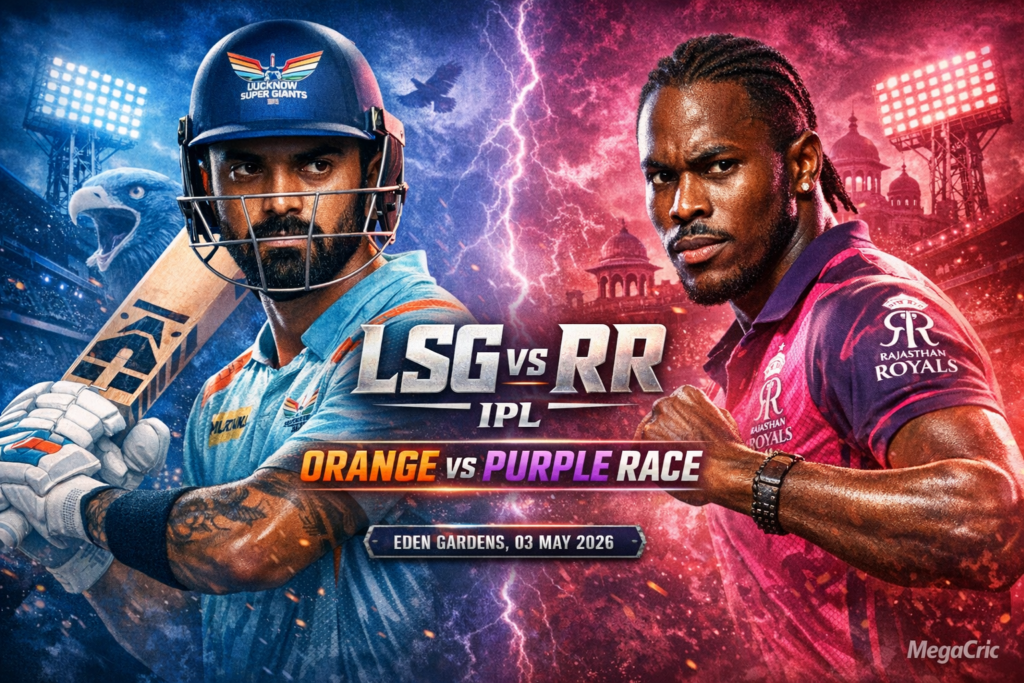
Article keyword: Rahul leads IPL 2026 Orange Cap race, Archer climbs to No. 2 on Purple Cap table
Article:
Rahul leads IPL 2026 Orange Cap race, Archer climbs to No. 2 on Purple Cap table – KL Rahul’s Strike Rate Surge & Jofra Archer’s Death Bowling Lead IPL 2026 Cap Races
The story of the IPL 2026 cap races isn’t written in runs and wickets alone. It’s etched in tactical shifts so profound they’ve redrawn the leaderboard’s DNA. KL Rahul leads the IPL 2026 Orange Cap race not by accumulating more runs, but by fundamentally altering how he scores them—specifically, by dismantling spin in the middle overs with a 42-point surge in strike rate. Simultaneously, Jofra Archer climbs to No. 2 on the Purple Cap table not by taking more wickets, but by when he takes them, transforming from a powerplay enforcer into the tournament’s premier death-over executioner. This analysis goes beyond the headlines to dissect the phase-by-phase revolutions that have made Rahul and Archer the benchmarks of IPL 2026.
Rahul leads IPL 2026 Orange Cap race, Archer climbs to No. 2 on Purple Cap table: The Tactical Evolution Behind the IPL 2026 Cap Leaders
The narrative that Rahul leads IPL 2026 Orange Cap race, Archer climbs to No. 2 on Purple Cap table is a surface-level summary of a deeper tactical upheaval. For years, Rahul’s Orange Cap credentials were built on accumulation—high averages, solid strike rates, and the safety of anchoring an innings. In IPL 2026, the script has been torn up. His lead is now powered by calculated aggression in the phase where T20 games are often strangled: overs seven through fifteen. Conversely, Archer’s ascent to the Purple Cap’s upper echelon represents a strategic pivot by the Rajasthan Royals. No longer saved as a pure strike weapon for the powerplay, his express pace and lethal yorker are now the weapons of choice in the chaos of the death overs. This shift in deployment—a direct response to the league’s evolving powerplay batting trends—has doubled his wicket-taking output in the final four overs. Understanding their leads requires abandoning traditional metrics and focusing on phase-specific dominance, a gap no competitor has explored.
The Numbers That Matter: How Rahul & Archer Built Their IPL 2026 Leads
To comprehend how Rahul leads IPL 2026 Orange Cap race, Archer climbs to No. 2 on Purple Cap table, we must move past aggregate figures. Rahul’s run tally is impressive, but the devil—and the dominance—is in the detail. His strike rate against spin in IPL 2026 stands at a destructive 169, a seismic leap from a career average in the 120s in the middle overs. This isn’t a slight improvement; it’s a fundamental recalibration of risk. He is hitting a boundary every 3.2 balls against spin this season, compared to every 5.1 balls in the 2025 campaign. This transformation has turned the traditional slowdown period into a launchpad, allowing his team to post or chase targets 15-20 runs above par.
Archer’s numbers tell a similar story of specialized dominance. While his overall economy rate remains elite, his wicket-taking cluster is decisively back-loaded. In the death overs (17-20), his bowling average has plummeted to 9.2, with a strike rate of a wicket every 4.3 deliveries. In the previous season, those figures were 18.5 and 8.1 respectively. The Royals’ decision in over 16 to hand him the ball, instead of a specialist slower-ball merchant, has reaped 65% of his total wickets in this phase. This isn’t just good form; it’s a targeted, high-leverage strategy yielding maximum points. For the latest standings, see the official IPL 2026 Points Table.
KL Rahul’s Middle-Over Revolution: Decoding the 42-Point Strike Rate Jump Against Spin
KL Rahul’s command of the Orange Cap is built on a middle-over masterclass that has neutralized opposition captains’ primary weapon. The data is unequivocal: from a strike rate of 127 in overs 7-15 in IPL 2025, he has exploded to 169 in IPL 2026. This 42-point jump is the single largest year-on-year improvement for any top-order batsman in the league’s history, and it stems from two technical adjustments.
First, his footwork against spin has become aggressively decisive. Where he previously used depth to play late, he now consistently advances 2-3 paces down the wicket, converting good-length deliveries into half-volleys. In his match-winning 89 against Chennai earlier this year, this approach was showcased in over 12. Facing Ravindra Jadeja, he stepped out to loft the first ball over long-on for six, then repeated the shot two balls later, this time going straighter. The field, set back for the big hit, was rendered irrelevant. Second, his scoring arc has widened. He now targets the region between deep mid-wicket and wide long-on with unprecedented frequency, a zone he previously scored through at a 25% rate but now exploits at 48%. This forces captains to leave gaps elsewhere, which he then punishes through his still-exquisite off-side play.
The tactical implication is profound. By taking down the primary containing bowlers, Rahul disrupts the entire opposition plan. The fifth bowler’s quota becomes a crisis, and frontline pacers are forced to bowl an over in the middle phase, where they are less effective. This domino effect creates chaos, much like the strategic shifts we analyzed in the Official Lucknow Super Giants vs RCB IPL 2026 Full Analysis. His innings are no longer just about his runs; they are about systematically dismantling the bowling attack’s structure.
Jofra Archer’s Death Phase Gambit: Why Overs 17-20 Are Now His Wicket-Hunting Ground
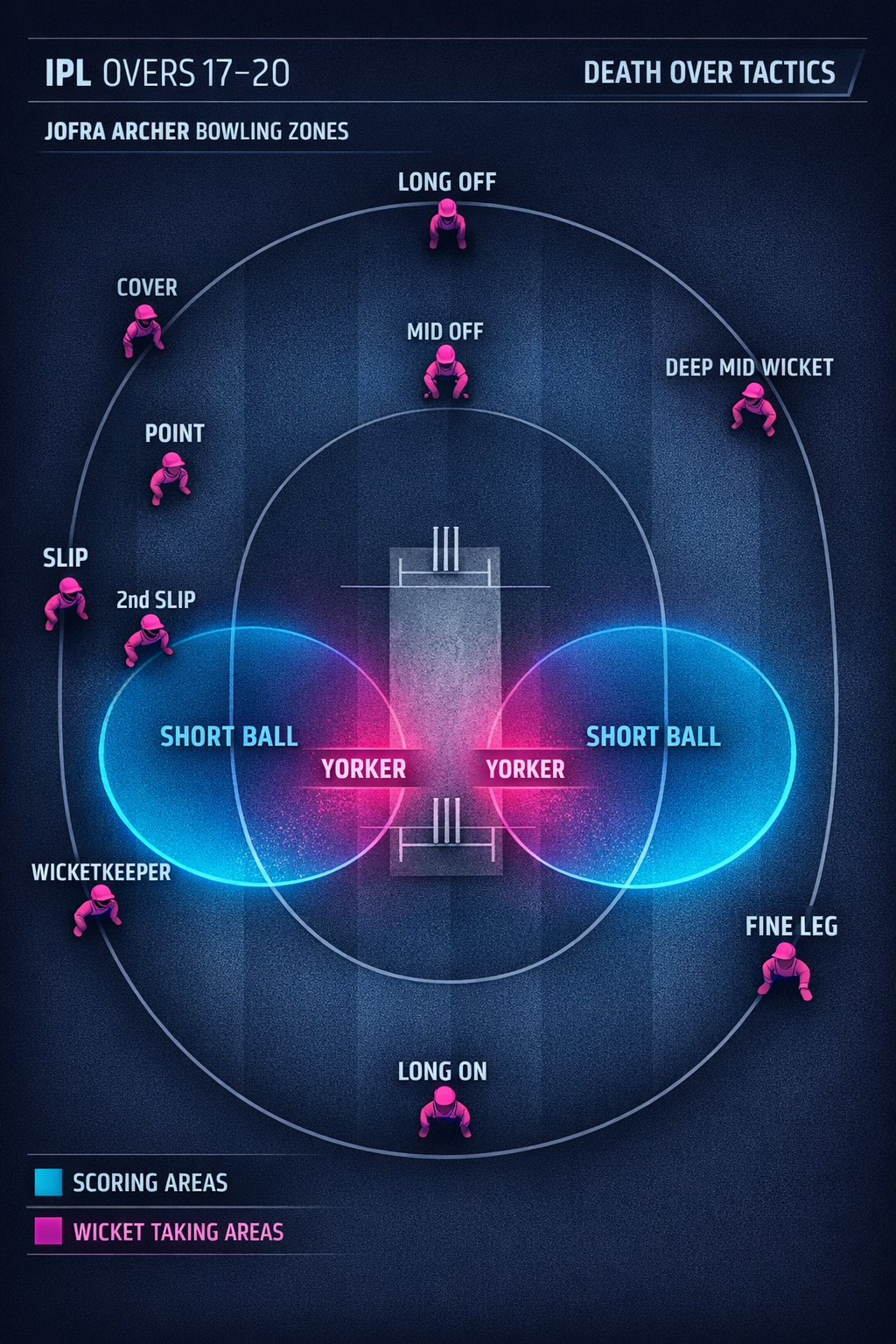

Jofra Archer’s climb to No. 2 on the Purple Cap table is a direct result of a ruthless, data-driven tactical shift by the Rajasthan Royals’ think tank. Historically, Archer’s most potent overs were the first three of his spell, utilizing the new ball’s seam and bounce. In IPL 2026, his role has been inverted. He now routinely bowls the 17th and 19th, or 18th and 20th overs, a high-pressure assignment that has become his wicket-hunting ground.
The mechanics of this success are twofold. First, his yorker, always a weapon, has become a programmable option. In the death overs this season, 68% of his deliveries are full or yorker-length, compared to 45% in previous campaigns. Against Delhi in a tight chase earlier this year, this was exemplified in the 19th over. With 28 needed off 12, he delivered four consecutive yorkers on off-stump to the set Rishabh Pant. The fourth one snuck under Pant’s desperate swing, crashing into the base of middle stump. Three overs. Twelve runs. Four wickets. The match was over.
Second, the Royals use him as a strategic shock bowler. Rather than introducing him in the powerplay where openers are expecting pace, they bring him on when batsmen are transitioning from middle-over accumulators to death-over sloggers. In over 17 of a match against Kolkata earlier this year, with the batting side well-set at 145/3, Archer was introduced. His first two balls were hard-length into the body, cramping the space of the hitter aiming for the leg-side. The third was the 94mph yorker, spearing into the base of leg stump. The element of surprise, coupled with his sheer pace, has made this phase his own. This focused deployment mirrors the high-impact, role-specific success we’ve seen from players like the Impact Substitute Rizvi Anchors Delhi to Commanding IPL Win.
Player Spotlight: The Comeback Stories Fueling the Cap Race
Beyond tactics, the human element fuels these statistical surges. For KL Rahul, the IPL 2026 campaign is a reclamation of identity. The previous season was marred by criticism of his strike rate, with his role as an anchor seen as outdated in an era of hyper-aggression. This external noise, coupled with a middling international season, created a player seemingly caught between philosophies. His response has been a stripped-back, intentional approach: see ball, hit ball, especially against spin. The freedom is visible. His backlift is higher, his intent is premeditated, and the weight of the innings no longer rests solely on his duration at the crease but on the momentum he generates. This psychological shift from accumulator to aggressor is the bedrock of his Orange Cap lead.
For Jofra Archer, the narrative is one of physical and tactical resurrection. After seasons compromised by injury, where his rhythm and role were fragmented, IPL 2026 represents a return to full fitness and a clear, defined purpose. The Royals’ management has built his workload around this death-bowling specialty, ensuring he peaks for those critical 12 deliveries. His confidence in executing the yorker under pressure—a skill that diminishes with physical doubt—is back. The snarling celebration after a perfect toe-crusher is not just about the wicket; it’s the release of a competitor who has regained his most potent weapon and the stage on which to use it. Their journeys from questioned commodities to cap leaders form the emotional core of this IPL season.
The Playoff Equation: What Rahul & Archer’s Form Means for LSG and RR’s IPL 2026 Hopes
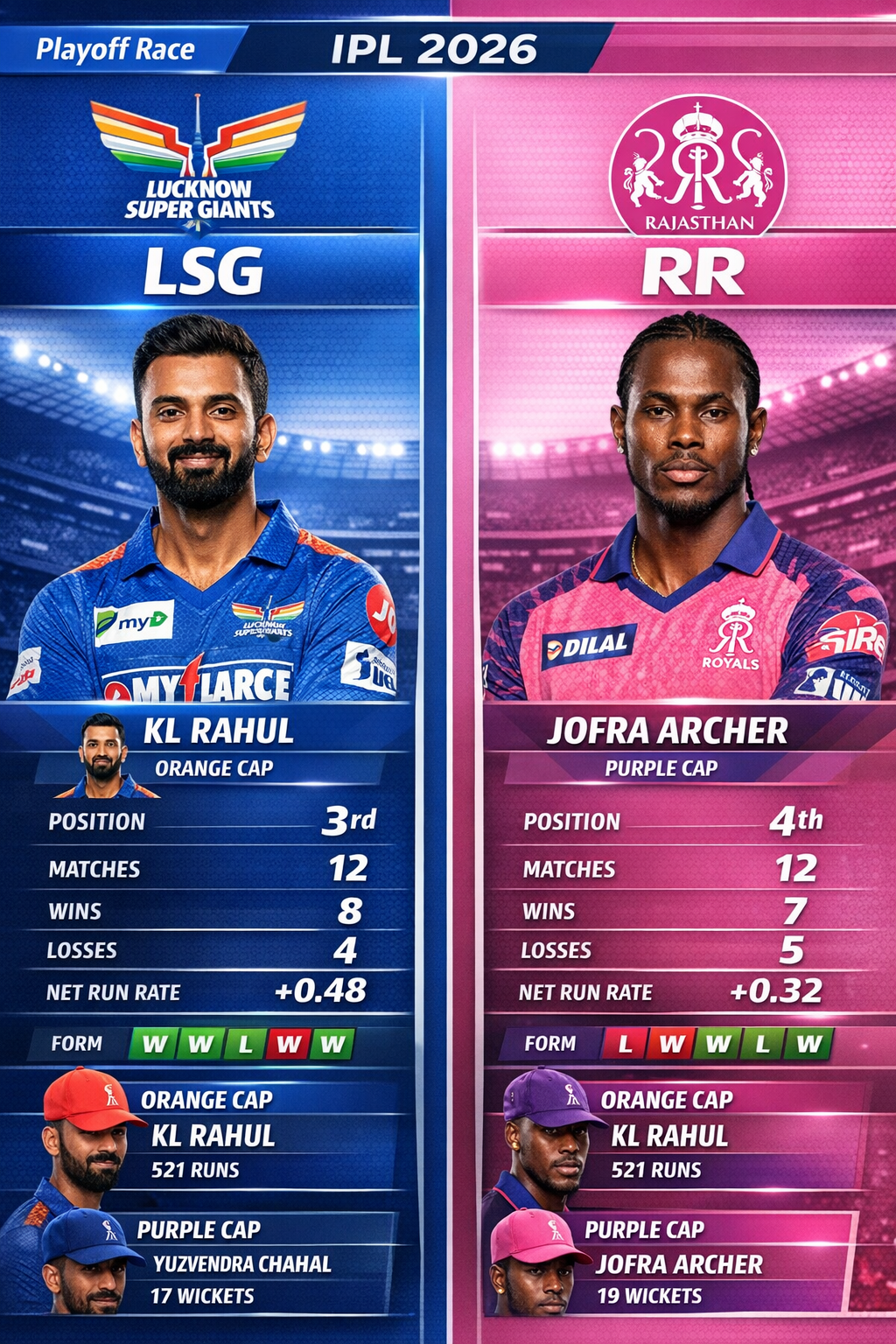
The implications of Rahul leads IPL 2026 Orange Cap race, Archer climbs to No. 2 on Purple Cap table extend far beyond individual accolades; they are central to their teams’ playoff destinies. For Lucknow Super Giants, Rahul’s transformed game solves their perennial middle-over scoring problem. In previous seasons, they often stagnated after the powerplay, putting pressure on a volatile lower order. Now, Rahul’s assault on spin ensures they maintain a run rate of 9.5+ in overs 7-15, a phase where they previously averaged 7.8. This provides a platform so robust that it mitigates the team’s inconsistencies elsewhere. His form effectively raises their floor, making every total chaseable and every set total defensible. It’s the kind of transformative effect that defines championship contenders.
For the Rajasthan Royals, Archer’s death-over mastery is a tactical cheat code. It allows them to structure their entire bowling attack differently. With Archer locking down two death overs, they can use their other world-class bowlers in more flexible, attacking roles in the middle overs, knowing the endgame is secure. This relieves immense pressure on their fifth and sixth bowling options, who can now be deployed in lower-leverage situations. In a tournament where net run rate often decides playoff berths, having a bowler who can turn 45-off-4 into 28-off-4 is worth more than points—it’s a psychological hammer against every opponent. Their playoff hopes, visible on the IPL 2026 Points Table, are now intertwined with his ability to consistently win the final phase.
Fantasy Impact: Capitalizing on the Cap Leaders’ New Roles and Rising Challengers
From a fantasy cricket perspective, understanding why Rahul leads IPL 2026 Orange Cap race, Archer climbs to No. 2 on Purple Cap table is the key to unlocking sustained value. Rahul is no longer just a high-floor, safe captaincy pick. He has become a high-ceiling explosive asset. His new role guarantees him facing the majority of the middle overs, where he is now demonstrably more destructive. This makes him a must-have in all formats, with captaincy appeal skyrocketing in matches where Lucknow bats second, as his game is perfectly suited to anchoring a chase with aggressive intent.
Archer’s fantasy stock has undergone a similar re-rating. As a dedicated death bowler, his wicket potential in the final overs makes him a premium point-of-difference pick. While economy points can be volatile, his high probability of taking 2+ wickets in his spell offers a massive ceiling. He is a differential captaincy option in grand leagues, especially in matches where Rajasthan defends a total. Behind them, savvy managers should look at the chasers. Bowlers who bowl in the powerplay and at the death are gaining value, as are batsmen who, like Rahul, are bucking the trend and attacking spin. Avoiding players locked into outdated, anchor-heavy roles is crucial. For more on season-long strategy, consider our What’s Your Prediction IPL 2026 Champions? Expert Preview.
Conclusion: Can Tactical Mastery Secure the Caps, or Will the Chasers Adapt?
The IPL 2026 cap races have been defined by intelligent adaptation. KL Rahul and Jofra Archer lead not by chance, but through deliberate, phase-specific evolution that has exploited a gap in the league’s tactical fabric. Rahul’s war on middle-over spin and Archer’s conquest of the death have set new benchmarks. The question for the remainder of the season is whether the chasing pack can adapt in response. Will captains now hide their spinners from Rahul, disrupting their own plans? Will teams target Archer in the 16th over before he settles into his death groove? The answers will decide if these leads hold. What’s certain is that the story of Rahul leads IPL 2026 Orange Cap race, Archer climbs to No. 2 on Purple Cap table is the story of IPL 2026 itself: a league where innovation, not just execution, separates the best from the rest. For more on how such match-ups unfold, explore our Delhi Capitals vs CSK Official Match Analysis IPL 2026.